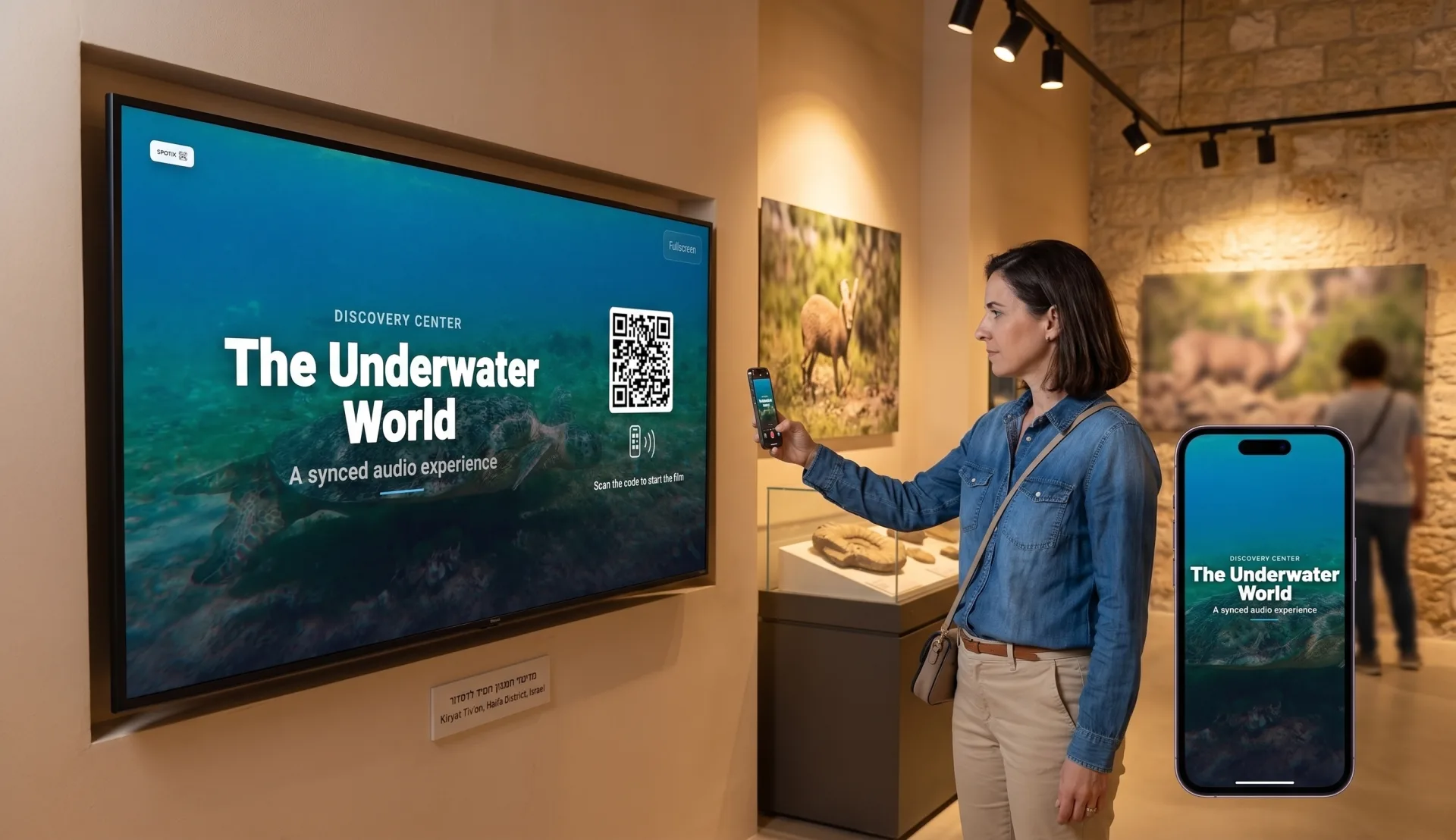
Seamless Museum Accessibility: Meeting EAA & ADA Standards for Video & Audio Guides
Ensuring full museum accessibility under the European Accessibility Act (EAA) with WCAG 2.1 AA and US ADA Title III standards provides cultural institutions with total operational peace of mind. With native museum apps achieving under 2.5% visitor download rates according to audio-guide provider Nubart, web-based QR solutions deliver instant accessibility directly in the mobile browser without software installation or hardware rentals. This guide explains how integrating real-time video synchronization, audio description, and word-by-word captions delivers comprehensive exhibit accessibility without infrastructure projects or hardware procurement.
What Are the Key Accessibility Mandates for Museums Under EAA and ADA?
The European Accessibility Act (EAA) using EN 301 549 (WCAG 2.1 AA) and US ADA Title III require cultural venues to offer sensory alternatives for all exhibition media. Institutions must provide built-in audio description tracks for blind and low-vision visitors, alongside real-time synchronized captions for deaf and hard-of-hearing guests across all video projections.
Beyond regulatory compliance, universal accessibility builds an inclusive visitor experience where every guest explores independently. While museums historically relied on renting hardware units, modern web platforms deliver synchronized audio and captions directly to the visitor's own smartphone.
Running on the visitor's own phone carries a decisive advantage for guests with hearing loss: modern hearing aids and cochlear implants are already Bluetooth-paired to their owner's smartphone, so the tour audio streams directly into the hearing device itself, at full quality and a personally tuned volume. No shared rental handset can offer that personal connection.
Learn more about how accessibility is built into the core of Spotix accessibility features with screen readers like VoiceOver and TalkBack.
How Do Web-Based QR Platforms Sync Video Projections in Real Time?
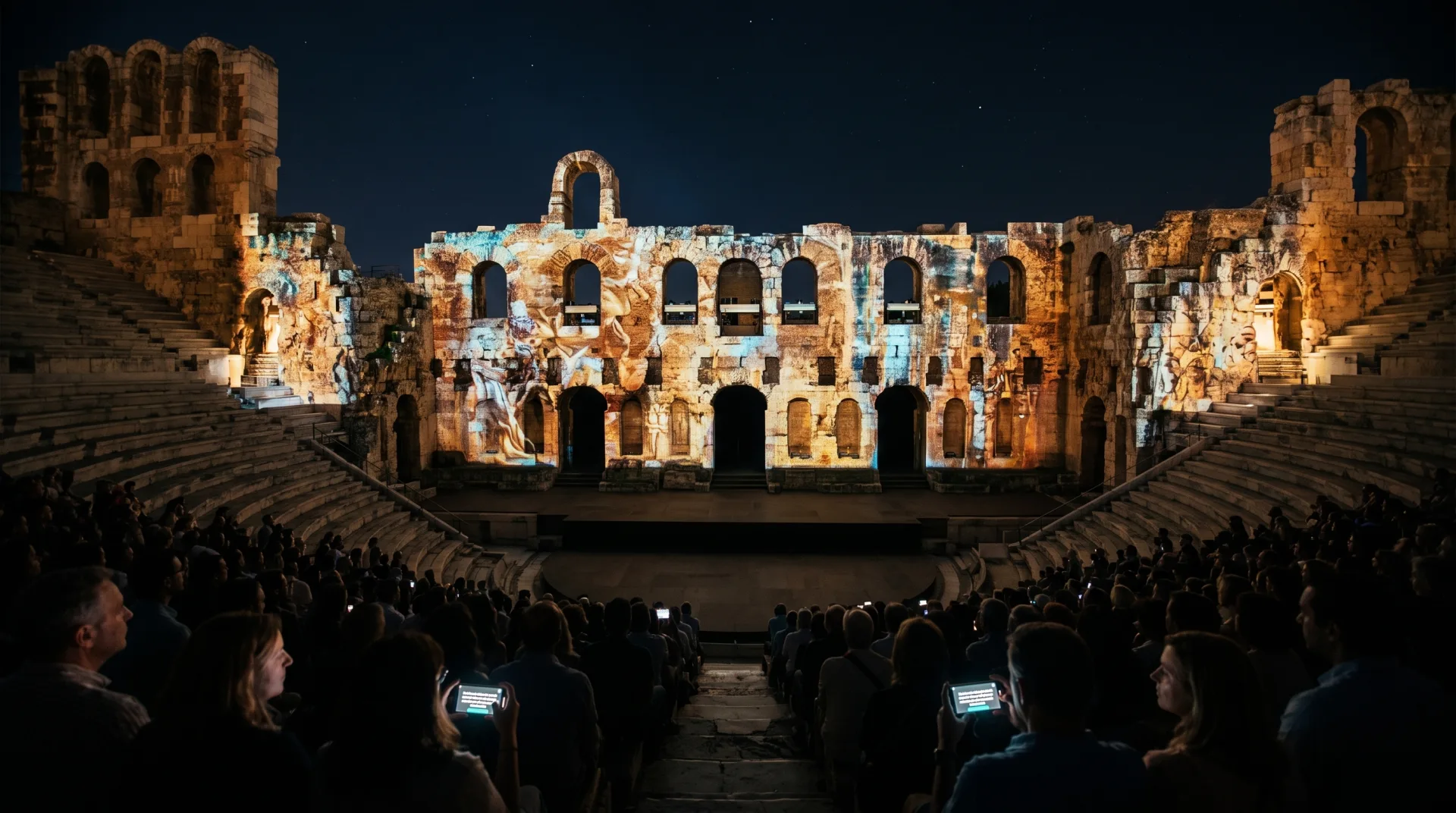
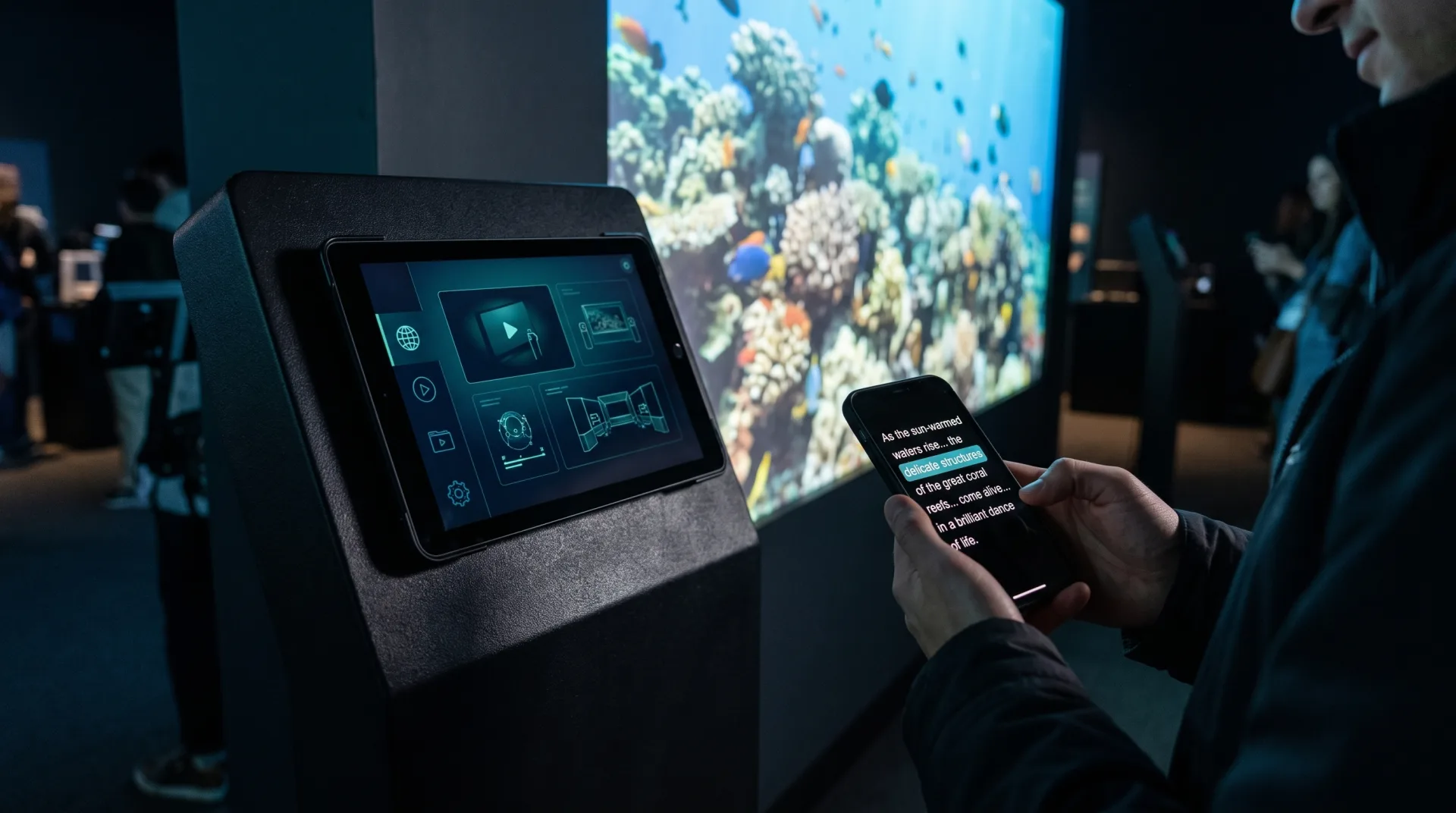
Web-based QR platforms utilize a shared cloud clock to synchronize mobile audio and word-by-word captions with display screens down to the millisecond. Visitors scan a permanent QR code on the display to stream multilingual narration and captions in perfect alignment with looping, on-demand, or live operator-controlled video projections.
By removing the need for native app downloads or translation booths, LingoCast allows international tourists and visitors with disabilities to join the screening seamlessly within seconds.
Venues implementing this frictionless approach report an average completion rate of ~90%, as highlighted in our dedicated solutions for museums and heritage sites.
Can One Platform Handle Both Video Projections and Exhibit Audio Guides?
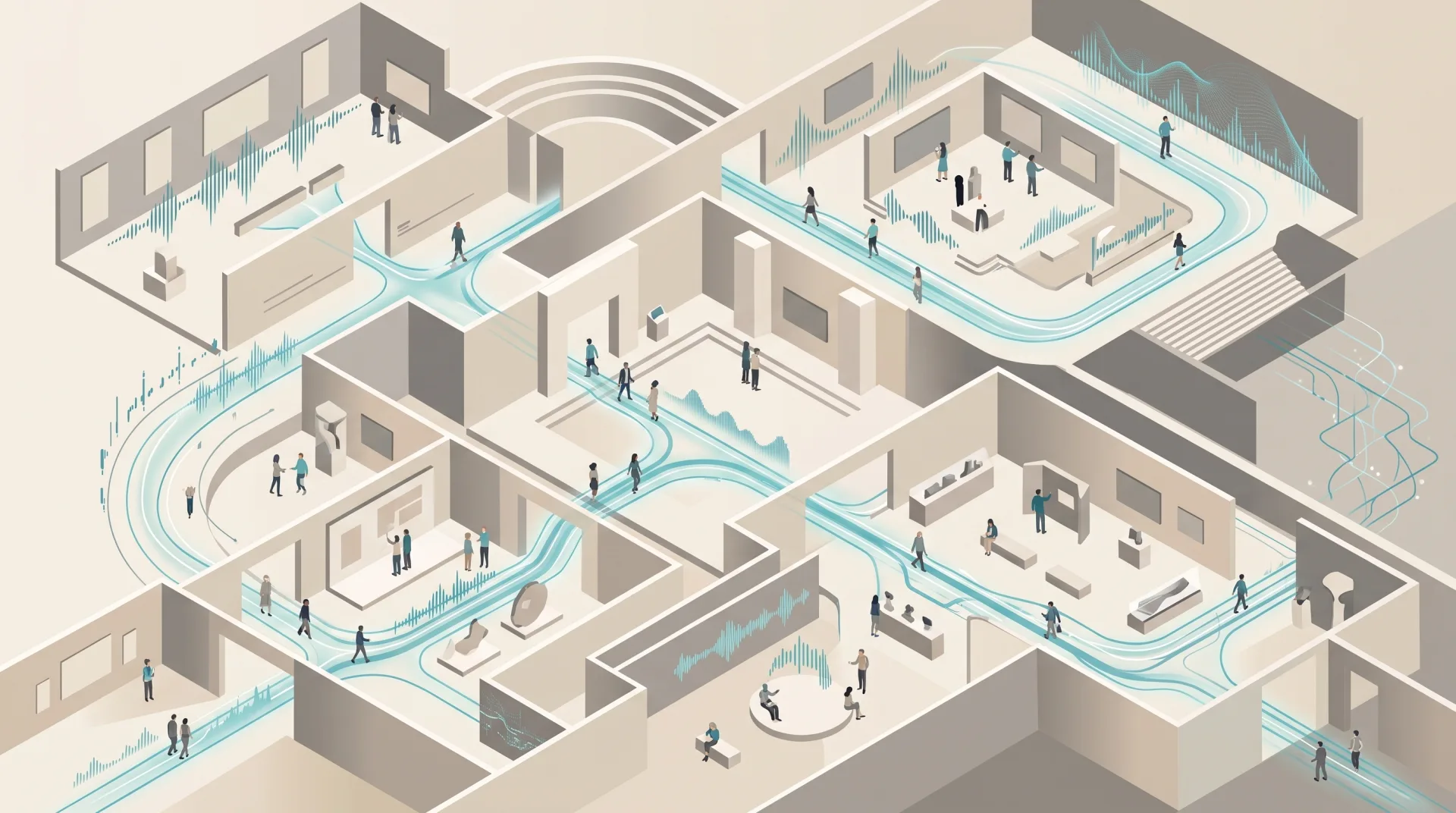
A unified web platform manages all exhibition media from video screens to individual audio guide stations within a single QR system. Visitors scan one QR code at a video exhibit for real-time synced captions, then continue through the hall exploring individual artifact stops with audio narration and word-by-word karaoke captions.
This unified approach eliminates operational complexity and avoids managing separate vendors for video subtitles and handheld audio devices. Every audio track automatically includes synchronized captions and screen reader compatibility for VoiceOver and TalkBack.
Discover how to easily build rich exhibit stops in our guide on rich content blocks and audio.
Why Do Native Museum Apps and Hardware Audio Guides Fail Accessibility Audits?
Native apps and hardware devices create physical and technical friction that prevents visitors from accessing accessible content. Data from audio-guide provider Nubart shows under 2.5% of visitors download native museum apps due to app store friction, while physical hardware suffers from high maintenance costs, sanitization demands, and long entry queues.
When accessible content is locked behind an app installation or a hardware rental desk, guests who need assistance are often excluded. Frictionless browser access ensures every visitor reaches accessible narration instantly.
Read how cultural venues implement lightweight digital solutions in our article on digital guides for heritage and memorial sites.
| Comparison Parameter | EAA / ADA Mandate (WCAG 2.1 AA) | Hardware Guides / Native Apps | LingoCast & Spotix Web Platform |
|---|---|---|---|
| Audio Description (AD) | Mandatory for visual & video content | Requires separate devices or complex app builds | Built-in AD option on the language selection screen |
| Synced Video Captions | Mandatory real-time captions for video | No sync or static text commentary only | Word-by-word karaoke captions in millisecond sync |
| Screen Reader Support | Full VoiceOver & TalkBack compatibility | Very limited on proprietary hardware devices | Fully tested native mobile browser screen reader support |
| Visitor Adoption Rate | Universal access for all visitors | Under 2.5% adoption for native museum apps | Instant browser access, no download or waiting |
Bottom Line
Meeting international museum accessibility standards does not have to be complex or costly. By adopting a unified platform that combines LingoCast's real-time video synchronization with accessible audio guide stops, your venue gains complete compliance, inclusivity, and total operational confidence.
Don't just take our word for it. Step into the LingoCast live demo right now, scan the QR code with your smartphone, and experience real-time video sync, audio description, and word-by-word captions live in action!